
Breathe Easy: Designing a Seamlessly Ventilated Home
Breathe Easy
Designing a Seamlessly Ventilated Home
The most comfortable homes have something in common that rarely gets talked about in design magazines: they breathe. The air moves through them in a way that keeps every room fresh, balanced, and alive, without relying entirely on mechanical systems to do the work.
This is natural ventilation, and it's one of the most powerful, and most underused, tools in residential design. When done well, it can dramatically reduce energy costs, improve indoor air quality, and make a home feel lighter and more spacious. When done poorly, you end up with a beautiful house that somehow always feels stuffy.
The Two Mechanics of Natural Ventilation
The Science Behind It
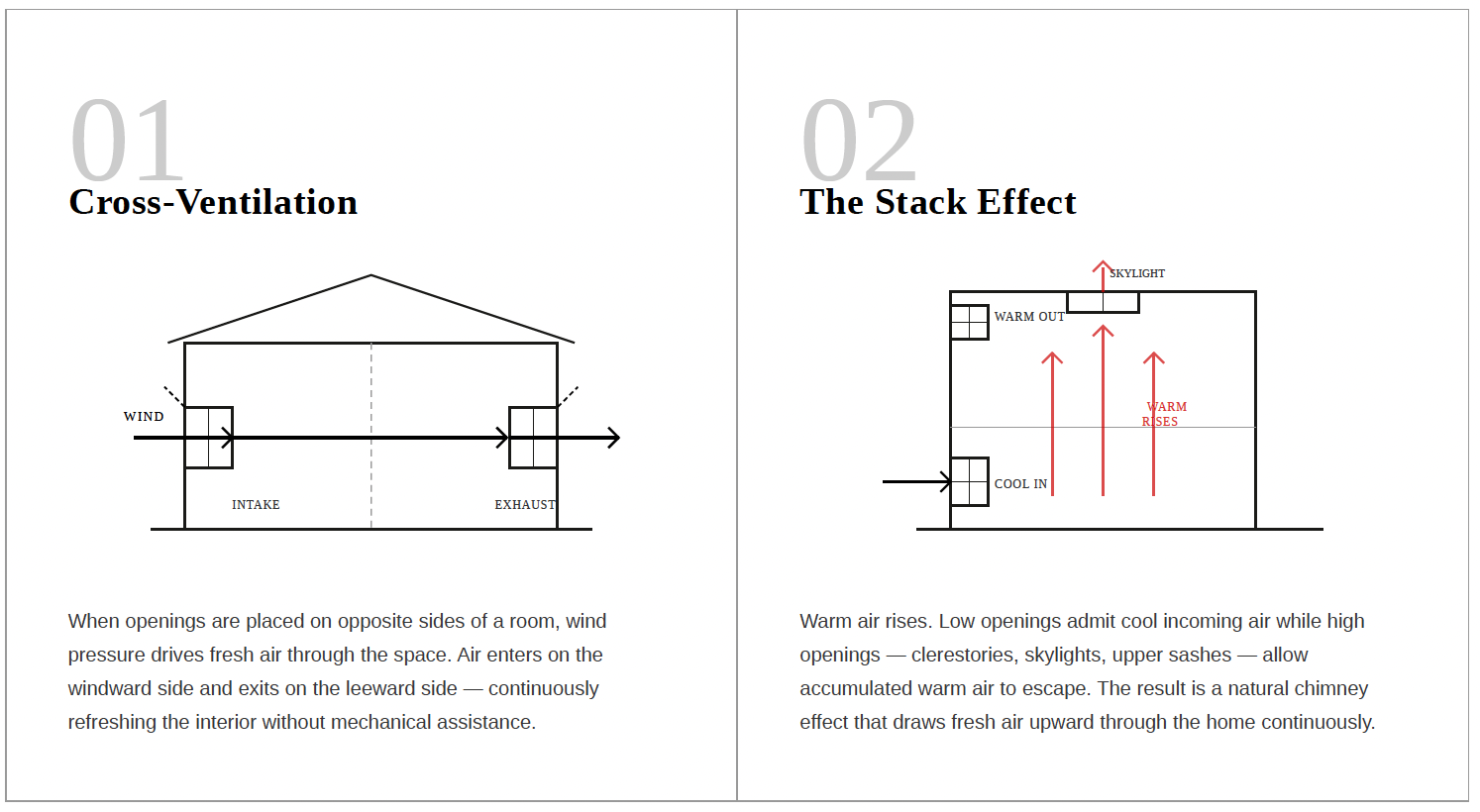
Natural ventilation works through two primary mechanisms. The first is cross-ventilation: when windows or openings are placed on opposite sides of a room or building, air flows through the space naturally as wind pressure pushes it from one side to the other. The second is the stack effect: warm air rises. When you place openings low (for cool air intake) and high (for warm air exhaust), you create a natural chimney effect that draws fresh air upward and out.
Both principles have been used in architecture for centuries. The challenge in modern luxury homes is integrating them seamlessly so that the ventilation strategy doesn't dictate the aesthetics, but enhances them.
Window Types and Their Ventilation Role
Windows as Ventilation Tools
The type of window you specify matters enormously for ventilation. No matter how large or how beautiful, a fixed contributes nothing to airflow. Operable windows, by contrast, can be engineered to work with the natural movement of air through a home.
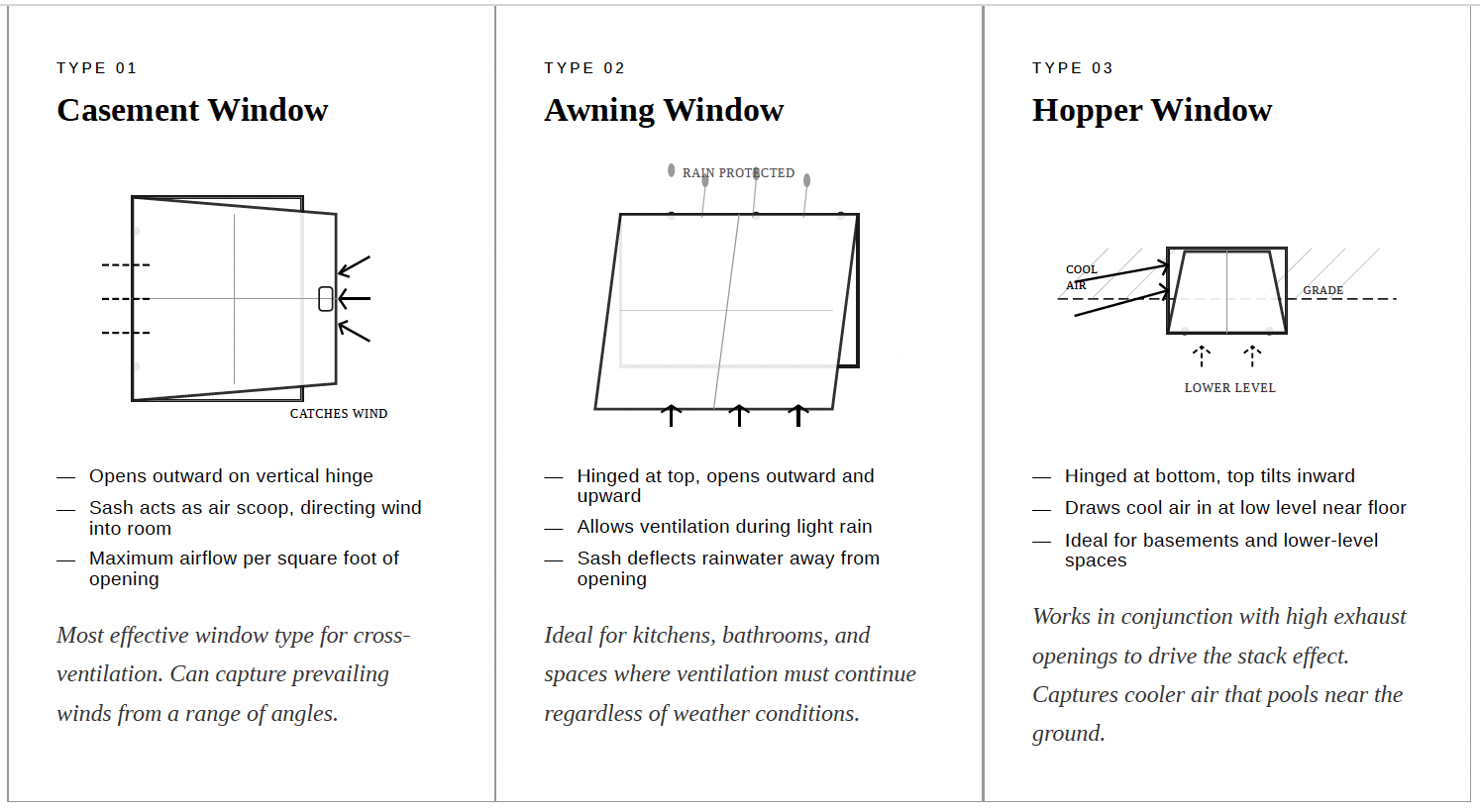
Casement windows, which open outward on a hinge, are particularly effective because they can be angled to catch prevailing winds and direct air into the room. Awning windows, hinged at the top, allow ventilation even during light rain. Hopper windows, hinged at the bottom, draw cool air in low — ideal for basements and lower-level spaces.
Architects who work with All the Details, frequently specify a combination of operable and fixed steel windows to maximize the visual impact of large glass expanses while carefully positioning operable units to ensure airflow exactly where it's needed.
Room-by-Room Strategy
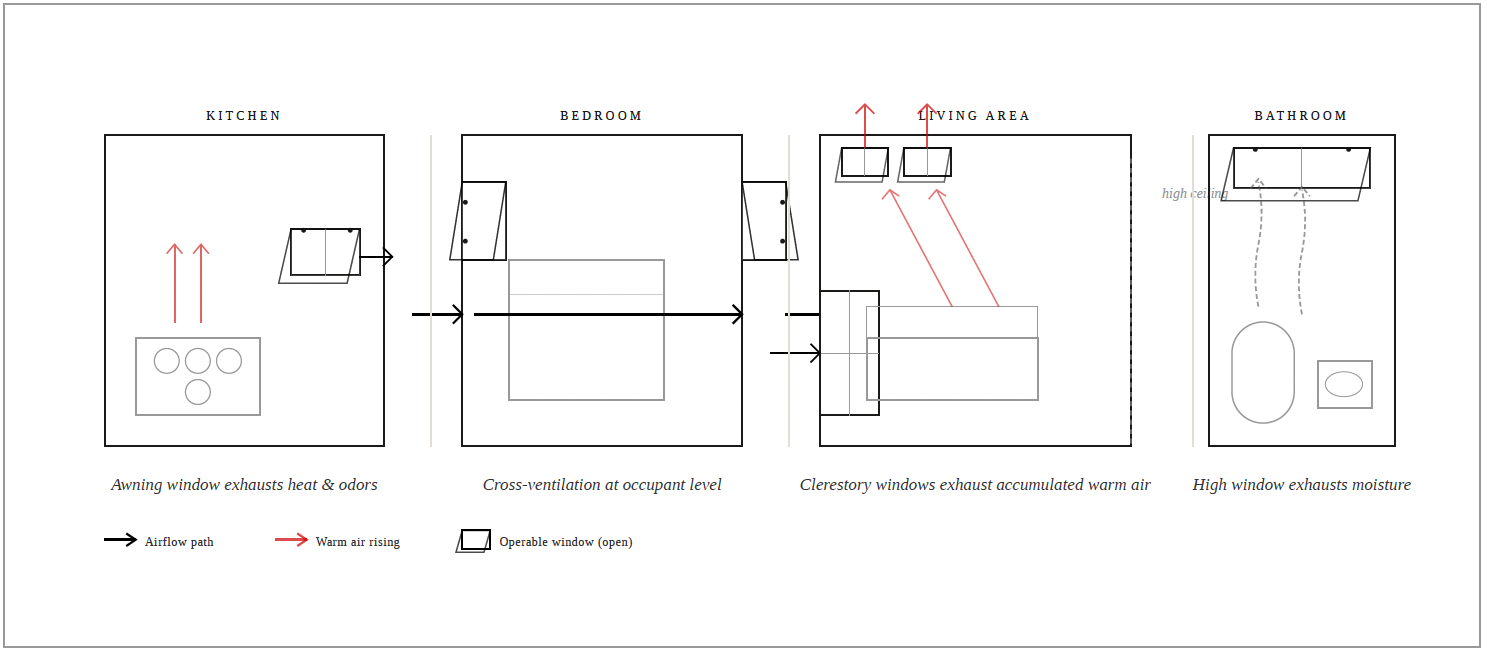
Effective natural ventilation isn't a whole-house afterthought - it's a room-by-room strategy. Kitchens benefit from operable windows placed near cooking surfaces to exhaust heat and odors. Bedrooms need airflow at occupant level, ideally cross-ventilated from front to back. Living areas with high ceilings benefit from clerestory windows or skylights that can be opened to release accumulated warm air. Bathrooms need dedicated exhaust paths - a small operable window positioned high on the wall can work in combination with a fan.
Balancing Natural and Mechanical Systems
The goal isn't to eliminate mechanical HVAC, it's to reduce dependence on it. In Fairfield County's climate, where summers can be warm and humid and winters cold, a hybrid approach works best. Design the home to take maximum advantage of natural ventilation during the shoulder seasons of spring and fall, when the outside air is at its most pleasant. Let the mechanical system handle the extremes.
This approach not only reduces energy consumption; it also extends the life of mechanical systems by reducing the hours they run each year.
Room-by-Room Ventilation Strategy
What Homeowners Should Ask
Before finalizing any window specification, ask your architect: Where are the prevailing winds on this site, and how do our window locations respond to them? Does this room have a path for air to enter and a separate path for it to exit? Are the operable windows placed at the right height for the type of ventilation this room needs?
At All the Details, we believe the most beautiful home is also the most thoughtfully designed one — and that includes the invisible systems that make it a pleasure to live in year-round.
Questions about your project? Reach us at 203.316.8260.