
Decisions for a Hassle-Free Breeze: Glass, Screens and Shading for Steel Windows
Decisions for a Hassle-Free Breeze
Glass, Screens and Shading for Steel Windows
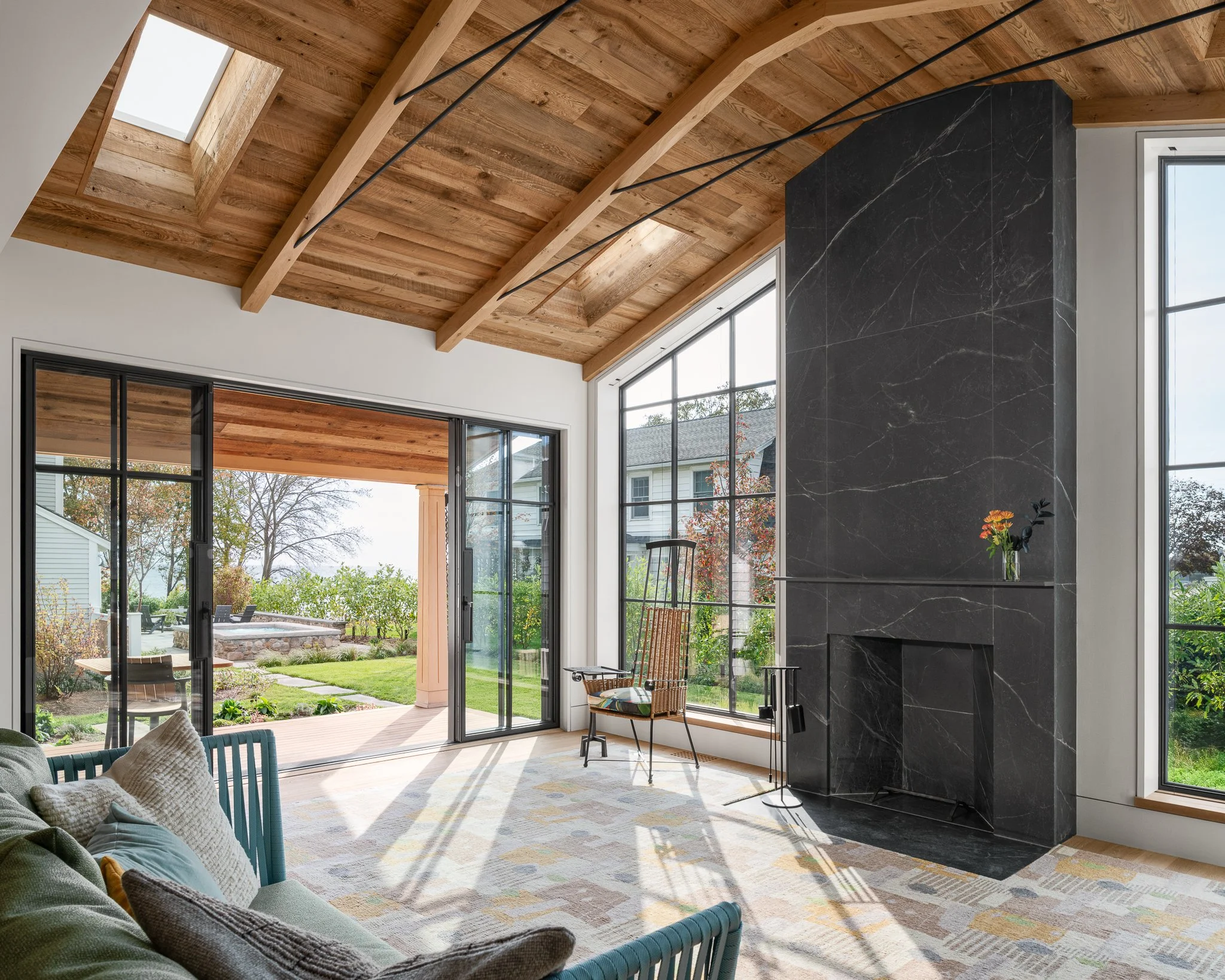
The appeal of custom steel, bronze, and aluminum windows comes down to what the narrow sightlines make possible. More glass. More connection to the outdoors. More of the view the project was built around. The frame becomes a precise edge, not a visual divider.
That much glass also creates real decisions about light, privacy, and seasonal comfort. Making those decisions in the right sequence saves money, avoids compromises, and protects the architecture you worked to create.
Start with the Glass
Before any screen or shade enters the conversation, the glass unit itself can be doing significant work. Low-emissivity glass, called low-E glass, is the standard starting point. The coating is microscopically thin and invisible. It reflects heat back in winter, deflects solar heat gain in summer, and blocks up to 99% of ultraviolet radiation, the primary driver of fading in furnishings, flooring, and art. (U.S. Department of Energy, 2024.) For most projects, a high-performance low-E insulated glass unit with argon fill between the panes handles the thermal and ultraviolet workload without any visual compromise.
For homes with significant art collections, laminated glass with a polyvinyl butyral interlayer takes the specification further. Laminated glass blocks up to 99% of ultraviolet light and is the glazing type most often specified for museum-quality environments. It also adds acoustic attenuation and keeps glass in place if a pane is ever broken, which matters in floor-to-ceiling applications.
Fluted or reeded glass has seen strong uptake for interior applications: steel-framed doors between rooms, sidelights, and partitions where privacy is needed but blocking light entirely is not the goal. Frosted or acid-etched glass achieves full privacy with a flat, diffused surface. Light transmission stays high. Clarity drops to zero.
None of these glass types are mutually exclusive with screens or shading. Getting the glazing right is the foundation. Everything builds from there.
Integrated Concealed Screens and Shades
A screen or a shade that reads as an afterthought on a custom metal window undoes the specification. The problem is not the product. It's the sequence.
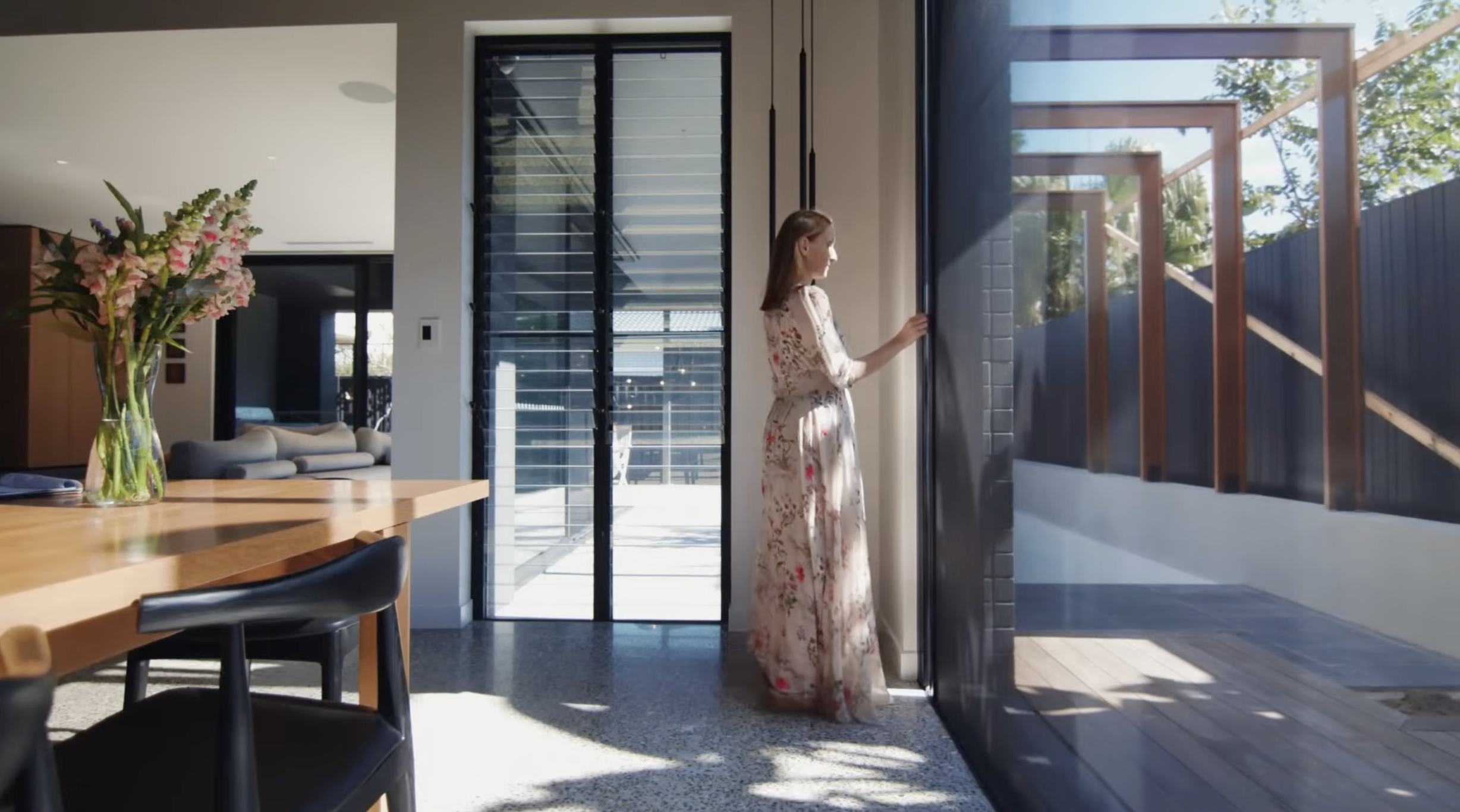
All the Details developed the Integrated Concealed Screen and Shade system, the ICSS, to solve this directly. The screen housing and shade mechanism are engineered into the window or door unit at the factory, as part of the assembly. Not retrofitted. Not mounted to the face of the frame after the fact. The screen and shade can be both engineered or used independently, depending on need.
When neither is in use, both disappear. The window reads as designed: narrow profile, clean glass plane, uninterrupted frame. When you want ventilation, the screen deploys and retracts smoothly. When you need solar or privacy control, the pull the shade across the opening - it retreats the same way. We offer both interior and exterior operation, sized individually to each unit, with hardware that disappears into the wall when not in use.
On lift-and-slide or bifold door systems opening to a terrace, the logic is identical. The ICSS handles insect screening and motorized shading at the most architecturally significant opening in the project, without adding anything visual to the fenestration.
This is a factory decision, not a field one. The concealment depends entirely on how the unit is built. Ordering the ICSS in advance means the housings are integrated into the profile. Trying to recreate that result after installation is not possible in the same way. If windows are being specified now, this is the conversation to have before the package is finalized.
Managing Light Without Losing the Window
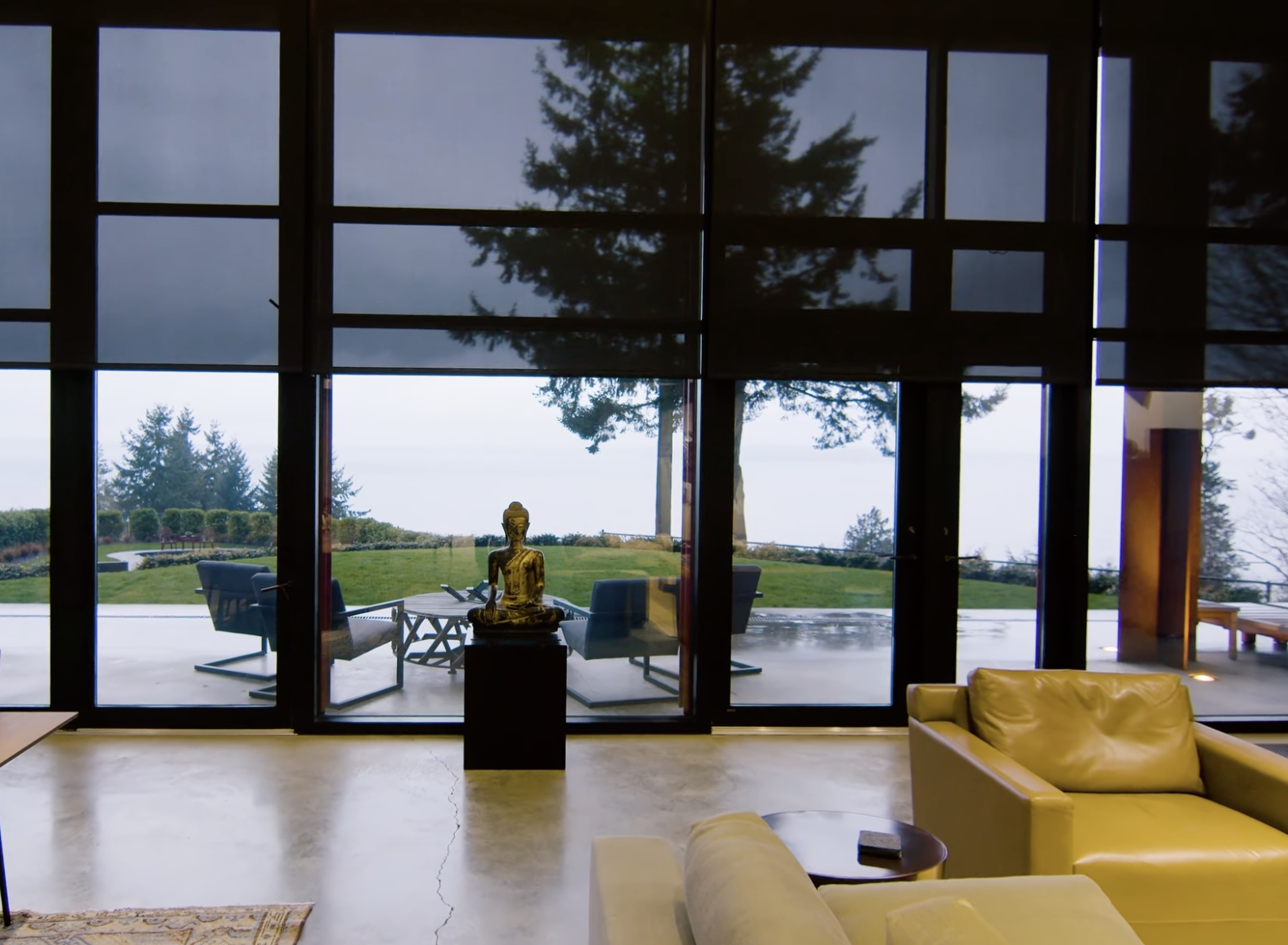
When motorized window treatments are layered over the ICSS or used at openings where the ICSS is not part of the assembly, the governing principle stays the same. When the treatment is open or raised, it should essentially disappear. When it is closed, it should feel like a deliberate part of the room.
"If you want to be the number one lighting control company in the world, you have to control the number one light source in the world, the sun." Ed Blair, President, Lutron.
Lutron's motorized shading systems are built around that premise. Their location-aware systems synchronize shade movement with the sun's actual position to mitigate glare, reduce thermal heat gain, and maintain views to the exterior. For rooms with significant solar exposure, that responsiveness is the difference between a space that performs and one that requires constant manual management.
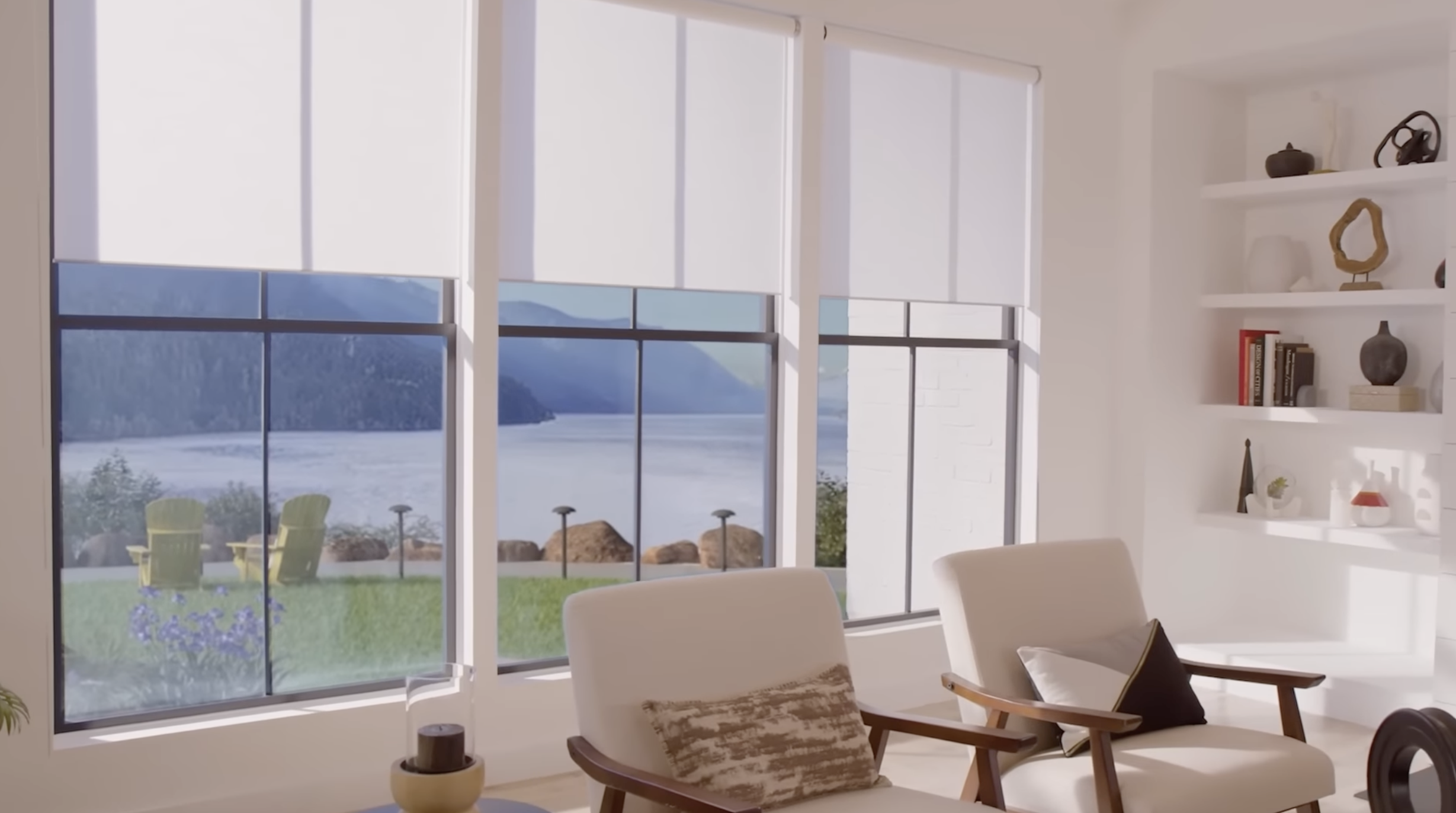
Solar shades are the workhorse of this conversation. A 3% openness factor blocks 97% of ultraviolet rays while still allowing useful diffused light into the room. A 5% shade has 95% opacity and blocks roughly 95% of ultraviolet rays. For primary living spaces and entertaining rooms, a 3% to 5% fabric in charcoal or graphite gives you meaningful glare and heat gain reduction while the view to the exterior remains legible. For a conservatory where preserving the outdoor connection is the architectural point, a 10% openness fabric deployed at peak sun hours does the job without making the room feel treated.
Darker fabrics, charcoal, bronze, graphite, absorb light and produce a cleaner view through the shade. On a dark steel or aluminum frame, a charcoal solar fabric reads as part of the window. It does not announce itself.
Roller shade assemblies recessed into ceiling pockets create a clean, minimalist result. Where reveal depth allows it, an inside-mount installation means the shade reads as part of the opening, not applied over it. Where the reveal is shallow, a close outside mount just above the frame line with the cassette finished to match the wall achieves nearly the same effect. Heavy cornice boxes and surface-mounted valances at the top of a slim steel frame do the opposite. They make the window feel smaller and work against the architectural choice that made it worth specifying in the first place.
For rooms with sliding or bifold door systems opening to exterior terraces, exterior motorized roller shades mounted under an overhang or integrated into a soffit stop the heat before it enters the glass plane. Exterior roller shades are more effective than interior treatments because they absorb or reflect solar energy before it reaches the glass. Lutron's Hyperion solar-adaptive shading software adjusts shades throughout the day in response to the changing position of the sun, reducing glare and heat gain automatically.
If you are early in a project, plan for the ICSS and the motorized shade system before the window package is finalized. Shade pockets get framed in during rough construction. Ceiling track systems are cleaner when the track is embedded in the ceiling plane. Exterior shade housing integrates better into a soffit detail than it does bolted on afterward. These decisions cost relatively little to make correctly at the start.
All the Details designs, manufactures, and installs custom steel, bronze, and aluminum windows and doors. To learn more about the Integrated Concealed Screen and Shade system or to schedule a showroom visit, call 203.316.8260 or email contact@atdetails.com.
View our work at atdetails.com